BMIC: From Wallet to Quantum Cloud
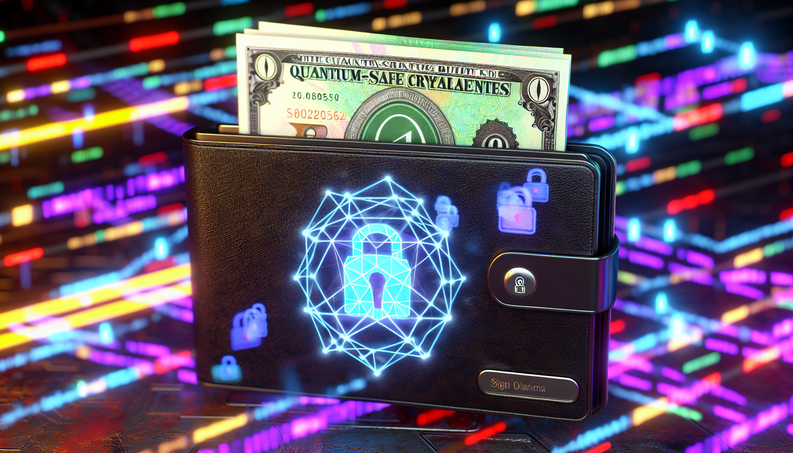
The evolution of digital security is entering a new era as quantum computing poses imminent threats to traditional cryptography. BMIC.ai is leading innovation with its blockchain micro-ion compute technology, aiming to deliver quantum-resistant wallets and a decentralized quantum compute cloud. This article explores the significance of BMIC’s forward-thinking solutions and how they equip us for the emerging quantum landscape.
Understanding the Quantum Challenge
Quantum computing is set to challenge the very foundation of digital asset security. Current cryptographic systems—such as RSA (Rivest-Shamir-Adleman) and ECDSA (Elliptic Curve Digital Signature Algorithm)—underpin secure digital communications and wallet protections, but they were never designed to confront quantum-level computation. The rise of quantum computers brings powerful new algorithms, notably Shor’s algorithm, which dramatically reduces the effort required to break current encryption by factoring large integers and solving discrete logarithms exponentially faster than classical computers.
This development could lead to scenarios where a quantum attacker retrieves a private key from a public key, instantly compromising wallets and siphoning digital assets. Such vulnerabilities threaten not just individual users, but the global trust framework underpinning blockchain and cryptocurrencies.
With quantum computing’s timeline to mainstream adoption uncertain, both individuals and institutions must act now to reevaluate and fortify their digital security protocols. Proactive adoption of quantum-resistant methods is crucial to mitigating new risks before they materialize.
BMIC is at the forefront of this defensive shift. By building a blockchain-driven, quantum-compliant infrastructure, BMIC leverages post-quantum cryptography (PQC) to protect users and democratize access to quantum computing. Their integrated AI resource optimization further adapts security measures to an evolving threat landscape, ensuring continuous protection for users and their digital assets.
BMIC’s vision extends access to quantum computing beyond the elite, enabling everyone to securely manage digital assets in a rapidly changing world. A central focus is the development of quantum-resistant wallets—solutions purpose-built to withstand quantum attacks. The next section details the architecture and security principles behind these wallets.
The Concept of a Quantum-Resistant Wallet
Post-Quantum Cryptography and Wallet Security
Quantum computing’s rise brings both promise and peril. Digital wallets, responsible for safeguarding cryptocurrency and digital assets, now require enhanced defenses against quantum attacks. Quantum-resistant wallets are designed with post-quantum cryptography at their core, using new cryptographic algorithms capable of withstanding quantum computational power.
Traditional protocols like RSA and ECDSA, essential for current wallet security, are fundamentally vulnerable to algorithms like Shor’s. As quantum hardware matures, these traditional protections will rapidly become obsolete. Post-quantum cryptography steps in to provide new security foundations—lattice-based, hash-based, and multivariate polynomial cryptosystems are among the potential replacements, as highlighted in research by the National Institute of Standards and Technology (NIST) Post-Quantum Cryptography Project.
BMIC’s Wallet Innovations
BMIC incorporates PQC principles into its wallet infrastructure, deploying algorithms resilient to quantum decryption and designed to persist even if attackers wield quantum computing power. Central to BMIC’s quantum-resistant wallets is account abstraction—an approach that separates wallet operations from underlying cryptographic processes. Users interact seamlessly with wallets, benefiting from advanced security without technical complexity.
BMIC’s use of hybrid signature models further strengthens defenses. By layering traditional digital signatures with quantum-resistant alternatives (such as lattice-based algorithms), wallets gain adaptable, dual-layer protection. Even as threats evolve, wallets equipped with hybrid models remain robust against both present and future attack vectors.
- Account abstraction: Simplifies user experience while maintaining quantum-level security.
- Hybrid signature models: Combine established and quantum-resistant cryptography for layered defense.
- Smart contract integration: Automates asset management with secure, programmable protocols.
BMIC’s mission is to democratize secure quantum access for all users, ensuring confidence and resilience in the face of emerging digital threats. These innovative security measures are pivotal steps toward a decentralized, quantum-ready economy. To learn more about the vision and team driving these technological advances, explore the BMIC team page.
Exploring BMIC Technology and Innovations
Core Components of the BMIC Ecosystem
BMIC’s technology unites quantum computing, artificial intelligence, and blockchain into a groundbreaking ecosystem for decentralized quantum resources. The prominent components of this architecture are:
- Quantum Meta-Cloud: A global, distributed network providing on-demand quantum processing power. Unlike traditional quantum platforms, the Quantum Meta-Cloud is accessible without significant investment, so users of all backgrounds can solve complex computational tasks without costly infrastructure.
- Quantum Security-as-a-Service (QSaaS): BMIC addresses quantum-era security concerns by providing a suite of quantum-resistant algorithms. QSaaS ensures data protection, boosts ecosystem trust, and supports broad adoption of quantum technologies.
- Burn-to-Compute Model: Participants “burn” tokens—removing them from circulation—to earn quantum computing resources. This mechanism creates a deflationary token economy and incentivizes users to contribute unused computational power, fueling network collaboration and efficiency.
By decentralizing quantum resources and integrating AI-driven optimization, BMIC improves both cost efficiency and performance. Blockchain-based governance empowers users to control their resources, enshrining transparency and democratization as fundamental principles in BMIC’s vision.
For details on BMIC’s economic and incentive structures, visit the BMIC Tokenomics page.
Tokenomics and Incentives in BMIC Ecosystem
The Role and Functions of the BMIC Token
The BMIC token is the engine powering the ecosystem, designed to encourage engagement and support the fusion of quantum computing with blockchain technology. Its utility includes:
- Serving as a transactional medium for quantum compute resources
- Enabling governance participation for token holders, who can propose and vote on changes to the platform
- Supporting staking mechanisms that reward long-term commitment and help secure network stability
- Driving value through a deflationary burn process, where tokens are permanently removed from circulation as part of network transactions
Incentives and Governance
Staking BMIC tokens fosters strong network engagement. Users who stake receive rewards proportional to their commitment, establishing practical incentives directly tied to platform usage rather than speculation. Governance is fully decentralized, with voting power reflecting token holdings—every participant shapes the future direction, upgrades, and resource allocations.
The BMIC token’s deflationary model differentiates it from inflation-prone cryptocurrencies. By burning a fraction of tokens used in network transactions, BMIC creates sustained scarcity and positions the token as a resilient digital asset. Participants thus become active stakeholders, invested in the continued success and evolution of the ecosystem.
For an in-depth exploration of BMIC’s roadmap and ongoing developments, consult the BMIC roadmap.
Practical Applications of BMIC Solutions
Transformative Impact Across Industries
BMIC’s quantum-resistant infrastructure addresses critical needs in multiple sectors. In finance, it secures digital transactions and assets, safeguarding monetary transfers with advanced cryptography. BMIC’s wallet can be integrated via its API by financial institutions to enhance client fund security against quantum-enabled threats. For example, global remittance providers can use BMIC’s platform to perform secure, low-fee cross-border payments using quantum-safe protocols—a critical advance in international finance.
In healthcare, BMIC’s quantum solutions secure and authenticate electronic health records (EHR), enabling encrypted, tamper-proof data sharing among hospitals, labs, and insurers. By adopting BMIC’s API, institutions can transfer patient information securely and compliantly, maintaining data integrity and privacy.
- Use in drug discovery: Pharmaceutical firms accelerate molecular modeling and personalized medicine by leveraging quantum computational power, securely managing proprietary data through quantum-resistant wallets.
- Digital identity management: BMIC provides zero-knowledge proofs and encrypted credentials, protecting against identity theft while empowering users with granular control over their personal data.
The real-world applications of BMIC technology—from secure payments and EHR exchanges to identity verification and advanced computational modeling—underscore its transformative potential. BMIC is setting new standards for security, efficiency, and trust across critical digital domains.
The Future of Digital Security and Computing
Decentralization, Compliance, and Quantum Readiness
The future of digital security is inexorably linked with quantum computing’s advance. BMIC’s technology stands out for democratizing access to quantum resources, empowering a wide array of innovators through its blockchain-governed ecosystem. This opens the door for secure, decentralized applications in smart contracts, identity management, and beyond.
Regulatory compliance is central to BMIC’s platform, aligning cryptographic standards with evolving global data privacy requirements. This compliance-ready architecture enables organizations to trust in the security and legality of their digital operations as regulations tighten worldwide.
Security Standards and Sector Impact
BMIC’s quantum-resistant protocols establish new security benchmarks, ensuring resilience both now and as quantum capabilities progress. Finance organizations can enhance transactional security, while healthcare providers protect sensitive patient data—all while meeting strict regulatory standards. Beyond these domains, the synergy of AI optimization and quantum computing offers breakthroughs for supply chain and logistics.
Ethical Considerations and Collaboration
Transitioning to quantum-ready infrastructures is complex, requiring cohesive research and collaboration among various stakeholders. BMIC’s transparent governance—rooted in blockchain accountability—addresses ethical concerns by fostering responsible, equitable access and mitigating potential misuse of quantum technology.
Positioned as a leader in the post-quantum era, BMIC’s integration of decentralization, compliance, and advanced security places it at the core of the next-generation digital economy. While challenges remain, continued innovation and collaboration are reshaping the architecture of digital asset management for a secure, accessible future.
Conclusions
BMIC.ai is pioneering a future-oriented approach to securing digital assets against quantum threats. By implementing quantum-resistant wallets and decentralizing access to quantum computing, BMIC stands as a leader in building a resilient digital economy. Exploring innovative solutions now is essential to safeguarding digital futures—for more details, visit the BMIC team page.
Written by Daniel Foster, Blockchain Analyst at BMIC.ai