BMIC: Security Stack + Compute Future
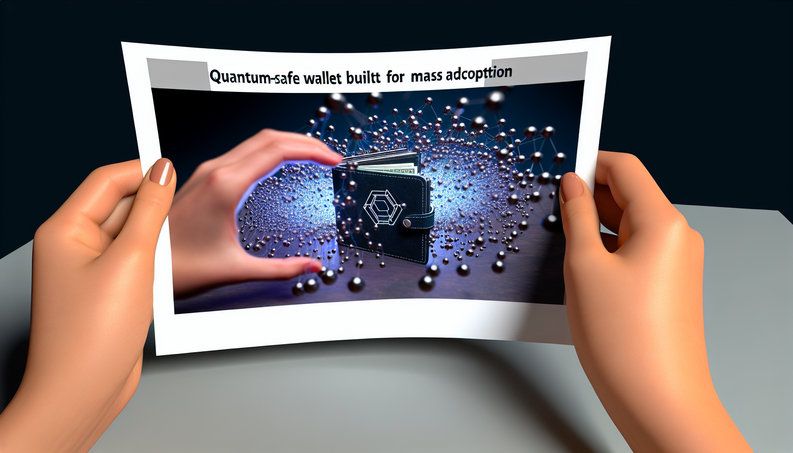
As we approach the quantum era, the importance of robust security systems has grown significantly. This article explores BMIC’s pioneering approach to building a secure stack using quantum-resistant technologies to address the emerging threats in digital finance and computation.
Understanding Quantum Threats
The evolution of quantum computing is redefining digital security, especially regarding how cryptographic systems protect assets in blockchain environments. It’s critical to grasp quantum threats as we shift from traditional to quantum computational paradigms. Quantum computers utilize the principles of quantum mechanics to process information at unprecedented scales, positioning them as powerful adversaries to current encryption technologies.
Classical cryptography relies on mathematical complexity—tasks easy to perform in one direction, but hard to reverse. For example, factoring large numbers underpins RSA encryption, a common security standard. However, quantum algorithms like Shor’s algorithm can factor these numbers exponentially faster, undermining most existing encryption systems. Similarly, Grover’s algorithm can accelerate the process of cracking symmetric keys, reducing the security of many familiar methods.
This shifting threat landscape means blockchain technologies must proactively integrate defenses against quantum attacks. The decentralized nature of blockchain, while adding resilience, does not inherently protect against sophisticated quantum exploits. As commercial quantum computing capabilities evolve, current cryptographic frameworks risk becoming quickly obsolete. This urgency is especially acute for blockchain networks, where trust underpins cryptocurrency’s fundamental value.
Adopting post-quantum cryptography (PQC) is now essential. PQC utilizes algorithms designed to secure systems against quantum attacks, with approaches such as lattice-based, code-based, and multivariate quadratic equations providing the foundation for next-generation security. These measures help safeguard blockchain transaction integrity and ensure smart contract authenticity.
BMIC leads in democratizing quantum computing while prioritizing security at every stack level. Using AI-driven resource optimization and PQC, BMIC proactively addresses quantum risks. The combination of blockchain governance with advanced security further strengthens BMIC’s mission to build a safer digital landscape for interconnected economies.
The path to effective quantum-resistance requires a forward-thinking, multifaceted approach. BMIC embraces this responsibility, innovating to balance quantum advancements’ benefits with the risks they pose. The field of quantum-resistant solutions will be central to protecting digital assets from the existential threats of quantum computing.
BMIC’s Quantum-Resistant Wallets
Quantum-Resilient Infrastructure
BMIC has reimagined the digital wallet with quantum-resilient architecture. Recognizing that conventional cryptography may not withstand quantum attacks, BMIC’s wallets offer advanced features like Post-Quantum Cryptography (PQC), account abstraction, and a burn-to-compute model for secure quantum resource access.
Key components of BMIC’s wallet design:
- Layered asset architecture for flexible, asset-specific security protocols
- Integration of quantum-resistant cryptographic algorithms
- Comprehensive protection for both digital assets and identities
Post-Quantum Cryptography in Action
BMIC’s wallets incorporate PQC algorithms that are believed to resist quantum attacks. Transactions are protected by cryptographic primitives that generate quantum-resilient digital signatures, making it extremely challenging for quantum computers to decipher or compromise user assets.
Account Abstraction and User Flexibility
Account abstraction allows users to customize smart contracts and wallet interactions, decoupling them from traditional blockchain address limitations. This not only simplifies user experience but also enables tailored security protocols, fitting the specific needs of any asset held within the wallet.
Burn-to-Compute Mechanism
BMIC’s burn-to-compute model lets users allocate a portion of their digital assets as a fee to access quantum computational resources for advanced operations. This dynamic system ensures access to quantum computing while maintaining wallet efficiency and operational integrity.
By integrating these innovations, BMIC’s quantum-resistant wallets provide a robust, customizable, and future-proof solution for securing digital assets and identities. This model empowers individuals and organizations to confidently protect digital assets against quantum threats, positioning BMIC at the forefront of digital security innovation. For insights into BMIC’s team behind these developments, visit the BMIC team page.
The Role of Quantum Security-as-a-Service
What is Quantum Security-as-a-Service (QSaaS)?
Quantum Security-as-a-Service (QSaaS) is designed to help enterprises integrate quantum security protocols without overhauling existing infrastructure. Through BMIC’s platform, businesses can access APIs and services that embed quantum security—including quantum key distribution (QKD) and post-quantum cryptography—directly into daily operations.
Benefits and Use Cases
QSaaS protects sensitive information from evolving threats with solutions that seamlessly integrate into legacy systems. Its key benefits include:
- Enterprise-grade quantum security for digital transactions and data
- Protection for industries such as finance, healthcare, telecom, and government
- Regulatory compliance and reinforced customer trust
- Cost-effective access to next-gen security—regardless of enterprise size
For example, financial institutions can secure high-value transactions, healthcare organizations can protect patient data, and telecommunications firms can safeguard networks from advanced cyber threats.
Continuous Support and Integration
BMIC’s QSaaS model offers ongoing updates and optimizations, adapting rapidly to new cyber threats. This ensures that organizations maintain state-of-the-art defenses and eliminate vulnerabilities resulting from outdated systems. Continuous improvement aligns with BMIC’s mission to democratize quantum capability access for all organizations.
By integrating QSaaS, enterprises contribute to an ecosystem that empowers security, trust, and resilience. The adoption of QSaaS signals a new era in cybersecurity strategy—one where organizations stay prepared for the realities of quantum computing’s rise.
Decentralized Compute: The Quantum Meta-Cloud
Flexible, Peer-to-Peer Quantum Computing
BMIC’s Quantum Meta-Cloud is transforming decentralized computing by utilizing a distributed, peer-to-peer network that connects diverse quantum computing resources. This approach reduces vendor lock-in and enables broad access to advanced compute power.
Key components of the Quantum Meta-Cloud include:
- Interconnected quantum computing nodes hosted by institutions, universities, and businesses worldwide
- Secure, transparent, and immutable transactions via blockchain integration
- Smart contract-based orchestration between users and quantum providers
Advantages over Centralized Systems
- Eliminates bottlenecks of traditional cloud providers, enabling efficient scaling
- Enhances security by distributing data across multiple nodes and applying quantum-resistant technologies
- Makes quantum computing accessible to all—from startups to enterprises
Empowering AI Workloads
The synergy of quantum computing and AI is a cornerstone of the Quantum Meta-Cloud. AI workloads benefit from quantum parallelism, accelerating learning, decision-making, and complex problem-solving. BMIC’s tailored APIs enable seamless AI model deployment and scaling, further empowering businesses to unlock advanced, data-driven insights.
The Quantum Meta-Cloud exemplifies how decentralized architectures can unite technology, security, and computational power, driving innovation in digital transformation and AI enablement.
The Economic Model of BMIC Tokens
BMIC Tokenomics and Ecosystem Utility
The BMIC token, compliant with the ERC-20 standard, is fundamental to the BMIC ecosystem. It serves as the primary medium for:
- Staking to secure the network and earn rewards
- Participating in governance decisions
- Facilitating payments for compute resources and premium services
This ensures alignment and active participation among users, developers, and stakeholders, enhancing both security and ecosystem growth.
BMIC’s tokenomics are designed for:
- Fair distribution and dynamic supply-demand balancing
- Capped total supply to encourage scarcity and value retention
- Intrinsic deflationary mechanisms, including periodic token burns
Explore the full BMIC tokenomics for detailed breakdowns of structure and incentives.
Staking, Governance, and Deflationary Dynamics
- Staking: Users stake BMIC tokens to earn rewards and help secure the network. This commitment reinforces network trustworthiness and decentralization.
- Governance: Token holders participate directly in project decisions, submitting proposals and voting on key initiatives, promoting transparency and community ownership.
- Deflationary Mechanisms: Regular token burns increase scarcity and help maintain value, promising greater long-term utility and trust in the economic model.
These mechanisms create a positive ecosystem feedback loop: increased confidence and participation fuel further growth and stability. BMIC’s economic model exemplifies how token-based systems can support and empower the decentralized, quantum computing future.
For more insight into BMIC’s future plans, visit their evolving project roadmap.
Preparing for the Quantum Future
Steps for Individuals
As quantum computing advances, proactive action is essential. Individuals should:
- Transition to PQC-based digital tools—update browsers, secure messaging, and email clients
- Enable two-factor authentication and use hardware security keys as interim safeguards
- Monitor BMIC offerings to access quantum-ready, secure solutions for communication and transactions
Strategies for Organizations
- Conduct comprehensive risk assessments to identify quantum vulnerabilities
- Integrate PQC across both public and internal systems
- Invest in team training on quantum-resistant encryption methods
- Leverage BMIC’s hardware and AI optimization for secure, scalable computing
- Adopt blockchain-based governance for transparent, agile tech decision-making
Staying informed is crucial for both individuals and organizations. Engaging with industry research, sector forums, and partnering with innovators like BMIC help prepare for rapid shifts in technology and security standards. Regular participation in webinars, workshops, and educational resources promotes a resilient approach to quantum resistance.
By taking these measures, stakeholders can confidently transition to a secure digital landscape—protecting assets and ensuring readiness as quantum computing accelerates.
Conclusions
As the quantum era quickly approaches, BMIC’s solutions mark a critical shift in digital security and computing. By emphasizing quantum-resistant technologies, BMIC not only protects digital assets but establishes itself as a leader in the future of decentralized, quantum-enabled computing.
To learn more about BMIC’s innovative approach and see how you can participate, visit our project roadmap for the latest updates.
Written by Daniel Harper, Blockchain Analyst at BMIC.ai