Post-Quantum Cryptography for Blockchain
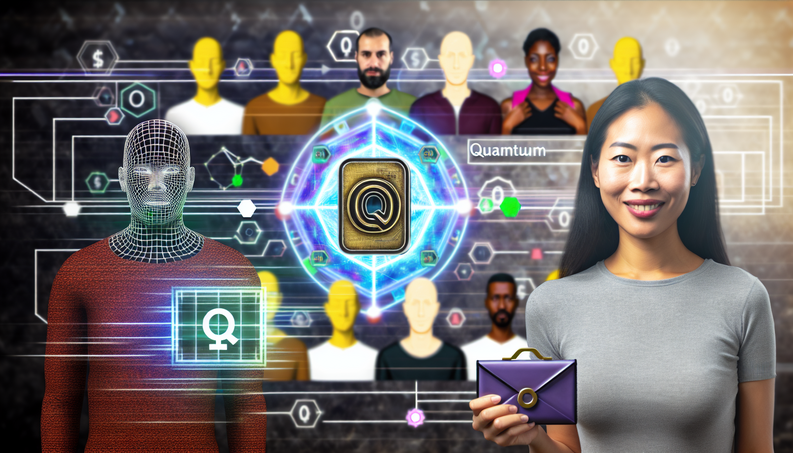
As quantum computing evolves, the need for post-quantum cryptography (PQC) becomes urgent. This article explores PQC’s critical role in blockchain, highlighting how BMIC.ai is leading the way with quantum-resistant technologies to safeguard digital assets from emerging quantum threats.
Understanding Post-Quantum Cryptography: Explaining PQC
The rapid progress in quantum computing poses major challenges for cybersecurity’s foundations. Post-quantum cryptography (PQC) is designed to secure digital communications against the immense computational power of quantum computers. Many classical cryptographic algorithms—such as RSA and elliptic curve cryptography (ECC)—are at risk due to quantum breakthroughs, especially Shor’s algorithm. This algorithm can efficiently factor large integers and compute discrete logarithms, threatening protocols that underpin today’s digital economy.
For example, a sufficiently advanced quantum computer could break RSA encryption, which depends on the difficulty of factoring large primes. Similarly, ECC’s security is undermined by quantum methods capable of solving the elliptic curve discrete logarithm problem. These vulnerabilities are no longer just theoretical: studies confirm that with enough logical qubits, quantum computers could decrypt sensitive communications or financial transactions in hours rather than millennia.
To address these threats, PQC relies on mathematical problems believed to be hard even for quantum computers. Leading candidates include lattice-based, code-based, and multivariate polynomial cryptography. These quantum-resistant algorithms are being developed and tested to withstand attacks from quantum adversaries, ensuring the ongoing security of digital information.
BMIC.ai is committed to democratizing quantum capabilities and integrating PQC within blockchain ecosystems. By leveraging AI resource optimization and robust blockchain governance, BMIC supports a timely transition to secure, quantum-resistant frameworks. As a result, blockchain participants benefit from enhanced resilience against future quantum-powered threats.
PQC is not simply a theoretical concept—it addresses urgent challenges to digital privacy and security. The ongoing development and implementation of these quantum-resistant cryptographic solutions are crucial to preserving the confidentiality and integrity of our interconnected world, forming the cornerstone of the next generation of security technologies. For further insight, the NIST Post-Quantum Cryptography project provides authoritative industry updates.
The Quantum-Resistant Wallet
Key Characteristics of Quantum-Resistant Wallets
Building a quantum-resistant wallet ecosystem is essential for securing digital assets in a quantum computing future. Such wallets must:
- Utilize non-custodial designs, empowering users to own their private keys and minimizing centralized risks.
- Support programmable smart wallet functionalities (e.g., ERC-4337, EIP-7702) that allow customizable, conditional transactions.
- Incorporate privacy-preserving features like stealth addresses and ring signatures to keep public keys hidden from quantum attackers.
- Enable multilayered security, including multisig transactions that require multiple private keys for enhanced protection.
Technologies and Approaches for Wallet Security
Programmable wallets let users embed logic that restricts access or execution based on custom conditions, further reducing quantum risk. Privacy features such as stealth addresses and ring signatures limit exposure by concealing public keys, making it much harder for attackers to identify funding sources even if transaction data is compromised.
Layered approaches like multisig add resilience—multiple key holders must authorize a transfer, so single-key compromises are insufficient for theft. These approaches collectively enhance resistance to both classical and quantum attacks.
BMIC’s Role in Wallet Ecosystem Innovation
BMIC’s mission to democratize quantum computing is tightly linked to the evolution of secure wallet ecosystems. By making quantum resources accessible and leveraging AI to optimize cryptographic processes, BMIC fosters the development of innovative wallet designs that integrate post-quantum security measures. This collaborative environment supports building secure, user-centric tools for the digital economy.
In summary, the journey to a quantum-resistant wallet ecosystem requires embracing non-custodial principles, harnessing programmable functionalities, and implementing robust, layered security strategies. These priorities align with BMIC’s commitment to empowering users and reinforcing blockchain resilience for the quantum era.
BMIC’s Vision for Quantum Security
Pioneering Quantum-Resistant Blockchain Infrastructures
BMIC.ai’s approach to embedding PQC into blockchain architectures ensures the long-term safety of digital economies. This strategy combines three pillars:
- Smart account wallets—programmable, self-sovereign solutions designed to minimize quantum attack surfaces and enhance user control via advanced cryptographic schemes.
- Hybrid cryptography—integration of classical and quantum-resistant algorithms to provide smooth, secure migration to post-quantum standards.
- Layer-2 solutions—off-chain transactions that boost scalability, adhere to stringent cryptographic requirements, and buffer network risks.
Foundational Security for the Blockchain Era
By building quantum security into blockchain systems from the outset rather than as an afterthought, BMIC empowers both users and developers. This architecture enables confident participation today while protecting digital assets from tomorrow’s quantum threats. BMIC’s ongoing efforts align with its mission of providing democratized access and resilient security frameworks across the blockchain landscape. To explore the project team’s expertise, visit BMIC.ai’s team page.
Implementing Hybrid Cryptography for Enhanced Security
Strategic Phased Implementation
Hybrid cryptography combines classical and quantum-resistant methods, serving as a critical transitional bridge for blockchain security. This approach leverages the strengths of both systems while gradually integrating quantum-resistant algorithms:
- System Assessment: Audit current cryptographic protocols and dependencies prior to migration.
- Pilot Programs: Test hybrid cryptography in specific applications (e.g., smart contracts, wallet transactions) to evaluate security and performance.
- Gradual Rollout: Sequence integration starting with high-priority areas, expanding across the ecosystem with minimal disruption.
Maintaining Compatibility and Trust
- Dual Signatures: Require both classical and quantum-resistant signatures, maximizing backward compatibility and smooth network transitions.
- Smart Contract Adaptation: Update contracts to handle hybrid signing, ensuring legacy systems operate securely alongside new ones.
- Interoperability Protocols: Facilitate communication and data transfer between traditional and post-quantum networks.
End-user education and transparent communication are crucial for adoption. This includes educational workshops, practical resources, and regular updates about implementation processes.
BMIC’s Innovations in Hybrid Cryptography
With expertise at the intersection of quantum computing, AI, and blockchain governance, BMIC delivers efficient, robust quantum-resistant algorithms. AI resource allocation further streamlines hybrid cryptography, reducing costs and operational overhead while maintaining high security.
Hybrid cryptography thus forms a key defense against quantum attacks, aligning with BMIC’s strategy to democratize quantum access and support the development of resilient blockchain platforms. For more about the practical timeline of BMIC’s technology rollout, see the BMIC.ai roadmap.
Quantum Security-as-a-Service: A Paradigm Shift
Empowering Enterprises With PQC
Quantum Security-as-a-Service (QSaaS) enables organizations to integrate PQC into their blockchain operations without a complete infrastructure overhaul. This service-based model makes quantum-resistant security flexible, scalable, and cost-effective for both large and small enterprises.
QSaaS leverages hybrid cryptographic environments in the cloud, allowing selective adoption of quantum-resistant algorithms where most urgent. This minimizes operational risk and permits gradual migration. Subscription-based access ensures companies remain current with the latest PQC advancements, democratizing previously exclusive security resources.
Enterprise Applications of QSaaS
- Identity Systems: Strengthen identity verification and credential protection with quantum-proof digital signatures, decreasing risks of future identity theft.
- Custodial Security: Integrate quantum-resistant protocols into custodial platforms, enhancing protection of digital assets and reinforcing user trust.
- Regulatory Compliance: Facilitate compliance with evolving regulations regarding quantum security and data protection, providing organizations with a competitive advantage.
QSaaS allows enterprises to proactively shape their security strategies. By making advanced PQC affordable and accessible, BMIC furthers its vision of widespread, equitable adoption of quantum-resilient technology across the blockchain sector.
Real-World Applications and Future Implications
Current Industry Strategies and Collaborations
The need for PQC integration is prominent as quantum advancements accelerate. Notably, ChainSafe has incorporated lattice-based PQC into Ethereum-based applications, mitigating the vulnerabilities of ECC systems to quantum attacks. Decentralized finance (DeFi) protocols like Gnosis Safe utilize threshold signatures and multi-signature wallets, ensuring that compromise of a single key does not threaten the entire asset pool.
DeFi and Governance Initiatives
DeFi platforms risk losing trust or assets if they fail to adopt quantum-resilient safeguards. MakerDAO’s collaboration with BMIC around post-quantum consensus mechanisms exemplifies how industry governance, AI optimization, and quantum technology can enhance digital asset security.
Impact on User Confidence and Regulatory Landscape
Quantum-resistant strategies benefit not just technology but also user confidence and regulatory compliance. As authorities increase scrutiny on cryptographic resilience, early adopters of PQC will be better positioned legally and competitively.
Quantum vulnerabilities also extend beyond finances to identity verification and data integrity. Combining post-quantum digital signatures with advances like zero-knowledge proofs creates strong, interoperable security architectures for the future.
Urgency is growing for organizations to act. By prioritizing PQC and collaborative innovation—as embodied by BMIC’s mission—the blockchain sector can maintain its integrity throughout the quantum transition.
Looking Ahead: Preparing for the Quantum Era
User, Developer, and Enterprise Readiness
With the quantum era on the horizon, blockchain participants must act now to secure their futures:
- Users: Choose quantum-resistant wallets, prioritizing those that employ PQC algorithms like lattice-based, hash-based, or multivariate polynomial schemes.
- Developers: Build dApps and blockchain architectures incorporating PQC and hybrid cryptographic layers; stay current with emerging research and collaborate with leaders in the field.
- Enterprises: Lead by example with strategic PQC adoption in mission-critical systems, adjust consensus mechanisms, and invest in organizational quantum literacy.
Continuous engagement with emerging standards and research—such as attending conferences, interacting in forums, and collaborating with experts—will prepare the blockchain community to meet quantum challenges. BMIC’s emphasis on governance and resource-sharing will be instrumental for industry-wide preparation; read more about BMIC’s tokenomics and community-driven model on the BMIC.ai Tokenomics page.
Conclusions on Quantum Resistance in Blockchain
Quantum computing’s rapid evolution threatens current blockchain cryptography. Immediate adoption of PQC is not just prudent but vital. BMIC.ai’s fusion of quantum computing access, AI-driven optimization, and decentralized governance positions it as a leader, opening opportunities for innovation and robust defense against quantum adversaries.
Community collaboration—engaging users, developers, and enterprises—is essential to ensure widespread and effective implementation of PQC solutions. Open-source initiatives, transparent communication, and investing in education will create a vigilant, adaptable blockchain ecosystem.
The way forward demands decisive, collective action to integrate quantum-resistant security at the very core of blockchain technologies, thereby protecting the digital economy for future generations.
Conclusions
In summary, transitioning to post-quantum cryptography is essential for securing the future of blockchain technology. BMIC.ai leads with innovative quantum-resistant solutions, ensuring that digital assets and infrastructure remain protected as quantum computing matures. Collective efforts now are critical to preserving the integrity of tomorrow’s digital economy.
To explore BMIC’s upcoming innovations and roadmap for post-quantum adoption, visit the BMIC.ai roadmap.
Written by Daniel Wright, Blockchain Analyst at BMIC.ai