Quantum-Resistant Storage and Payments
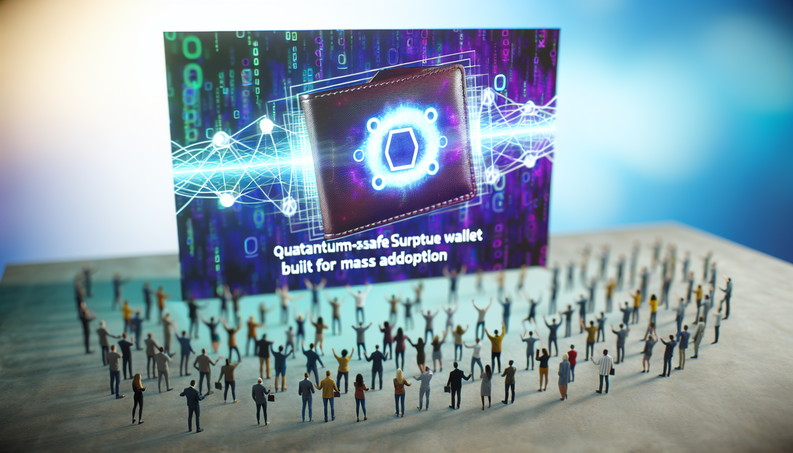
Quantum-resistant storage and payments are essential for safeguarding digital assets in the era of quantum computing. This article explores advanced technologies developed by BMIC to secure wallets and transaction systems against quantum attacks.
Understanding Quantum Threats to Digital Assets
Quantum threats have the potential to disrupt the entire digital finance landscape. Most traditional digital wallets and payment systems use classical cryptographic methods such as RSA (Rivest-Shamir-Adleman) and ECC (Elliptic Curve Cryptography), which secure Externally Owned Accounts (EOAs). The rise of quantum computing, however, poses a significant threat by potentially making these cryptographic protections obsolete.
Current cryptographic security depends on the computational difficulty of certain mathematical problems. For example, RSA relies on the difficulty of factoring large integers, while ECC depends on the challenge of the elliptic curve discrete logarithm problem. These are much harder for classical computers to solve but may be easily tackled by quantum algorithms, especially Shor’s algorithm. Should powerful quantum computers become widely available, attackers could break existing wallets, exposing private keys and allowing unauthorized fund access.
Industry research projects the global quantum computing market to surge from approximately $500 million in 2021 to $65 billion by 2030, indicating rapidly accelerating progress toward quantum supremacy according to Statista. This anticipated growth highlights an urgent need for digital finance to prepare for the intersection of quantum technology and financial systems.
If quantum attacks occur, digital wallets and stored assets are at serious risk. Stolen assets, increased incidents of theft, and erosion of trust in digital currencies and payment systems may follow. For institutions, failing to adopt quantum-resistant strategies could result in financial and reputational loss.
Current EOAs remain vulnerable, as they rely on cryptographic methods not equipped to withstand quantum threats. Given the looming risks, quantum-resistant storage and payments are no longer speculative—they are necessary. BMIC.ai’s unique approach leverages advanced quantum hardware, AI optimization, and blockchain governance to address these challenges. The following sections detail the technology and engineering empowering quantum-resistant wallets and secure transaction systems.
The Technology Behind Quantum-Resistant Wallets
Post-Quantum Cryptography: Building New Defenses
Quantum-resistant wallets are pioneering the defense of digital assets as quantum computing capabilities grow. Central to this defense is post-quantum cryptography (PQC), a suite of algorithms designed to remain secure even against powerful quantum computers. Embracing PQC represents a forward-thinking approach to digital finance security — especially as platforms like BMIC.ai seek to make advanced technologies accessible while maintaining transactional safety.
PQC algorithms like Kyber and Dilithium, both recognized by leading cryptographic institutions, showcase promising resilience. Kyber offers efficient public-key encryption, while Dilithium provides a secure lattice-based digital signature with efficient verification. Both mitigate risks posed by quantum algorithms such as Shor’s algorithm, which threaten existing cryptographic norms.
Architectural Evolution: From Classical to Quantum-Resistant Wallets
Classical wallets mainly depend on public-key cryptography for key management and user authentication—an approach exposed in a post-quantum environment. Quantum-resistant architectures eliminate or minimize public-key exposure using hybrid signature schemes, combining traditional methods with PQC techniques. In this configuration, even if one cryptographic layer is compromised, quantum-resistant measures maintain overall security.
Enhancing Security with Smart Accounts and Multi-Signature Schemes
Quantum-resistant wallets further bolster defenses through smart accounts and programmable contracts. Smart accounts enable self-executing transaction logic, reducing reliance on typical key management and shrinking vulnerabilities to quantum attacks. Multi-signature schemes distribute control among multiple parties, reducing single points of failure and increasing resilience.
Integrating these new cryptography standards into wallet design affords confidence in transactions, nurtures the growth of decentralized finance, and enables next-generation blockchain applications. BMIC.ai helps organizations and users unlock the full potential of quantum-resistant storage and payments, offering peace of mind as the quantum era approaches.
Innovative Models for User Security and Payments
Quantum Security-as-a-Service (QSaaS) for Enterprises
With quantum computing on the horizon, innovative models for user security and payments are crucial. Quantum Security-as-a-Service (QSaaS) allows enterprises to transition to PQC with minimal changes to existing infrastructure. By abstracting quantum complexities, QSaaS democratizes quantum-resistant solutions, making them accessible even to organizations lacking specialized tech expertise.
- Cost Efficiency: QSaaS mitigates the need for expensive hardware and extensive training.
- Scalability: Security measures can scale with demand, adapting to evolving quantum threats.
- Continually Updated Security: QSaaS providers keep protocols current with the latest advances, reducing the burden on individual enterprises.
Quantum-Secure Credit Card Systems
Quantum-Secure Credit Card Systems represent a significant step toward bridging traditional payments with quantum-ready protection. By integrating quantum-resistant cryptography, these payment models defend transactional data against quantum attacks while remaining compatible with established financial systems.
- Enhanced Transaction Security: Each transaction leverages quantum-resistant algorithms, greatly reducing the risk of both classical and quantum exploits.
- User Privacy: Advanced encryption methods protect user identity and transaction histories, reducing data leakage risks.
- Seamless Integration: These cards coexist with conventional infrastructure, making upgrades practical for businesses and consumers.
The Burn-to-Compute Economic Model
The burn-to-compute model funds quantum workloads by allowing users to ‘burn’ tokens or cryptocurrency to access quantum computing resources. This democratizes quantum access and encourages innovation without requiring users to own quantum hardware.
- Sustainable Incentives: Payments directly tied to resource use promote efficient consumption and fair distribution.
- Access for All: Smaller enterprises and developers can participate in quantum computing projects, fostering wider adoption.
- Collaborative Opportunities: The model brings together startups and established companies to accelerate quantum advancements.
Adopting these models fortifies digital finance against quantum threats, ensures robust infrastructure, and aligns with BMIC’s mission to democratize quantum computing. For further context, learn more about the BMIC roadmap.
BMIC’s Approach to Quantum-Resistant Solutions
Smart Accounts and Architectural Innovation
BMIC is redefining quantum resistance through a framework that blends advanced computational tools and blockchain governance. Its smart account system transforms wallets into dynamic entities, ready for rapid protocol updates and quantum algorithm integrations—without the need for disruptive redesigns.
Layer-2 Security Enhancements
Layer-2 (L2) security measures augment primary blockchains by shielding sensitive user data and transaction details from quantum threats. These L2 systems not only accelerate transaction speeds but also keep records encrypted, leveraging technologies like signature hiding to mitigate quantum risks during interactions.
Decentralized Quantum Meta-Cloud
BMIC’s decentralized Quantum Meta-Cloud harnesses distributed computing power, removing barriers to quantum access. This approach embodies trustless, transparent blockchain governance, enhancing both computational performance and the resilience of digital storage and payments.
By championing smart accounts, L2 security, and decentralized quantum resources, BMIC raises the standard for digital finance. These strategies help create a fundamentally resistant system, ready for a future defined by quantum advancements. Discover the BMIC team behind these innovations.
Practical Steps for Transitioning to Quantum-Safe Storage
Upgrading Wallet Infrastructure
Transitioning to quantum-safe systems requires more than technology upgrades—it’s a complete realignment of digital frameworks to counter quantum threats. BMIC supports stakeholders at every stage. For wallets, a methodical approach includes:
- Assessing Current Infrastructure: Review existing cryptography and key management for vulnerabilities.
- Choosing Quantum-Resistant Algorithms: Transition to robust PQC, such as lattice or hash-based signatures. BMIC’s Quantum Meta-Cloud aids with algorithm selection.
- Implementing Hybrid Signature Schemes: Use multi-signature or dual-key systems to blend traditional and quantum-resistant protection.
- Securing Key Migration: Encrypt and transfer legacy keys into quantum-resistant environments.
- Educating Users: Provide guidance so users understand new features and best practices for safety.
Guidelines for Developers
- Design for Quantum Resistance: Integrate PQC from the initial stages of application development.
- Layer-2 (L2) Compatibility: Ensure seamless operation with L2 systems for improved privacy and speed.
- Adopt Secure Coding Standards: Follow practices set by organizations such as NIST.
- Thorough Testing: Simulate quantum attacks to verify effectiveness and reliability of new security measures.
Overcoming Adoption Challenges
- Fostering Industry Collaboration: Work jointly with organizations like BMIC to establish universal standards and share knowledge.
- Securing Institutional Support: Engage governments and regulatory bodies for alignment and funding.
- Providing Clear Implementation Guidelines: Champion transparent frameworks for integrating PQC across platforms.
- Managing Costs: Advocate for strategic investments, grants, and incentives to ease the financial burden for adopters.
Committing to quantum-safe storage and payments empowers users and developers to face quantum-era challenges proactively. BMIC’s ongoing innovation, collaboration, and education set the stage for a secure and inclusive digital future.
Conclusion and Future Vision for Quantum Security
The need for quantum-resistant storage and payment technologies is both immediate and critical. With quantum computing advancing rapidly, securing digital assets with robust, future-proof measures has become a necessity—not an option. Platforms like BMIC are architecting frameworks that do more than address present risks; they equip organizations and individuals for a landscape in which cryptographic standards must constantly evolve.
Immediate steps must be taken to integrate PQC into financial systems, ensuring ongoing protection as quantum threats materialize. BMIC’s leadership in this arena, by promoting innovation, transparency, and democratized quantum access, provides a strong foundation for a secure digital economy. With a commitment to blockchain governance and resource optimization, BMIC’s approach enables confidence and resilience for all stakeholders.
Looking ahead, we foresee a world where digital transactions and storage are seamlessly fortified against quantum risks. Quantum-safe applications will not only elevate security but also improve efficiency and user experience, supporting robust economic growth unhindered by cyber threats.
BMIC’s vision is clear: by investing in secure, accessible technology today, we build the resilient quantum economy of tomorrow, equipping users and enterprises with the tools necessary to thrive in an ever-changing digital landscape.
Conclusions
In summary, adopting quantum-resistant storage and payment solutions is crucial for protecting digital assets from quantum threats. BMIC’s forward-looking technologies are setting new standards for a secure, resilient digital finance future. Learn more about BMIC’s innovative tokenomics and upcoming developments by visiting the BMIC tokenomics page.
Written by James Carter, Blockchain Analyst at BMIC.ai