The Only Token with Full Quantum Security
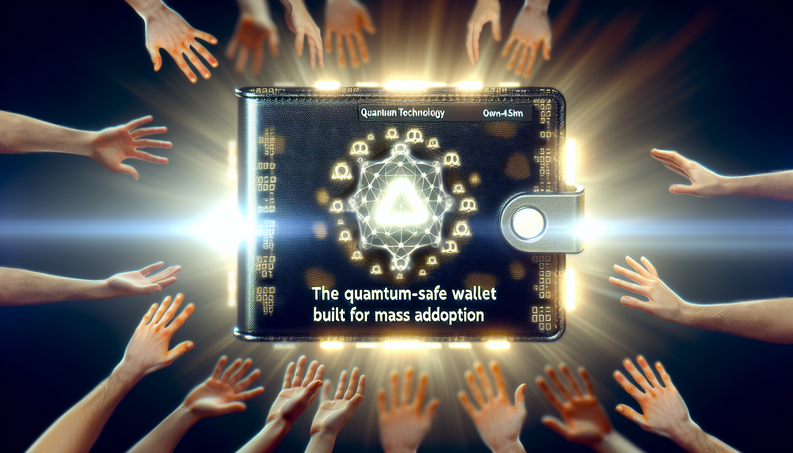
BMIC.ai stands at the forefront of digital security, pioneering a future where digital assets and communications are fortified against emerging quantum threats. This article examines the unique technology and architecture powering the BMIC token, showcasing how it embeds post-quantum cryptography at every layer to deliver robust protection for users in a rapidly evolving digital landscape.
Understanding Quantum Security
The emergence of quantum computing marks a seismic shift in digital security, directly threatening the viability of classical cryptographic algorithms such as RSA and ECDSA. These widely adopted algorithms have historically underpinned secure transactions and communications by leveraging the computational complexity of factoring large numbers or solving elliptic curve problems. However, advancements in quantum technology, particularly with quantum algorithms like Shor’s algorithm, have the potential to break these traditional schemes by factoring large integers at unprecedented speeds.
If quantum machines succeed, the foundational security of cryptocurrencies, e-commerce platforms, and other digital systems relying on RSA or ECDSA could be compromised. This risk extends to exposing sensitive information, resulting in substantial financial and reputational damage. In response, the digital world must transition to new security paradigms fit for the quantum era.
Post-Quantum Cryptography (PQC) emerges as the strategic answer, introducing cryptographic algorithms built on mathematical problems believed to be resistant to quantum attacks. These include:
- Lattice-based cryptography
- Hash-based signatures
- Multivariate polynomial equations
These constructs resist quantum decryption efforts, aligning with BMIC’s mission to democratize access to secure quantum computing. By prioritizing quantum resilience in its development roadmap (see BMIC’s roadmap), BMIC aims to establish robust PQC implementations across its ecosystem, safeguarding assets while enabling user engagement and inclusivity.
The urgency to adopt PQC cannot be overstated for organizations handling sensitive information. Proactively upgrading systems now protects data from future-exploitable weaknesses, ensuring integrity as quantum threats materialize. Supporting and collaborating with forward-looking initiatives like BMIC is crucial for advancing both quantum computation and next-generation security standards. For more background on these industry challenges, refer to current NIST post-quantum cryptography research.
The Spectrum of Quantum-Resistant Solutions
Post-Quantum Cryptographic Algorithms
With quantum computing on the horizon, the landscape demands innovative quantum-resistant solutions. Entities such as BMIC are instrumental in demystifying quantum computing through secure, decentralized platforms. Core PQC algorithms include:
- Kyber: A lattice-based algorithm excelling in encryption and key encapsulation, valued for efficiency and adaptability—especially important for BMIC’s mission of democratizing quantum technologies.
- Dilithium: Also lattice-based, focused on efficient digital signatures to balance security and transaction performance—a priority for BMIC’s open, decentralized computing environment.
- Falcon: Specialized for digital signatures leveraging lattice hardness, blending security and efficiency, perfectly matching BMIC’s vision for quantum-resistant blockchain governance.
Quantum-Resistant Wallets and Key Management
Secure wallets are critical for storing digital assets under quantum risk. Their core security features include:
- Multi-signature schemes using diverse PQC algorithms, ensuring redundancy if one method is compromised. BMIC’s hybrid signature approach exemplifies this practice.
- Advanced key management with threshold cryptography, distributing risk over multiple parties—aligned with BMIC’s collective, user-empowered governance.
Quantum Key Distribution (QKD)
Quantum key distribution revolutionizes cryptographic key exchange by leveraging quantum mechanics principles:
- Photon entanglement and quantum superposition offer high transparency—any interception of communications is immediately detectable, enabling fast incident response in place of reactive damage control.
- In decentralized ecosystems such as BMIC, QKD stands as a foundational pillar of trust and security for a quantum-empowered user base.
As quantum capabilities advance, integrating QKD into digital asset infrastructures will be vital for user trust and future-proof security. BMIC’s blend of quantum technologies and robust blockchain governance provides a strong safety net for digital innovation.
Together, PQC algorithms, quantum-resistant wallets, and QKD deliver holistic protection—directly supporting BMIC’s mission to democratize secure access to quantum computing. For more on the project structure and team behind these innovations, see the BMIC team.
BMIC Token Architecture and Technology
Quantum-Secure Token Ecosystem
The BMIC token ecosystem redefines digital asset security by fully integrating post-quantum cryptography. As the ecosystem’s center, the BMIC token drives both the utility and the security of the platform. Every transaction leverages advanced PQC measures, enabling users to transact with confidence, protected against quantum threats. The BMIC token also serves as the link between quantum computing innovation and blockchain technology, letting participants harness the latest quantum-resistant solutions for asset management.
Innovative Burn-to-Compute Model
An essential economic mechanism in the BMIC ecosystem is the burn-to-compute model. Users “burn” BMIC tokens to gain access to quantum computing resources, which:
- Optimizes resource allocation
- Drives a deflationary token supply by reducing circulating tokens
- Applies upward pressure on token value, rewarding active ecosystem participants
This model maintains a balance between making quantum computing accessible and supporting sustainable tokenomics. For more on BMIC’s value mechanisms, explore the BMIC tokenomics overview.
Hybrid Signature Validation System
BMIC further incorporates a hybrid signature validation system for maximum security:
- Combines classical and post-quantum signature algorithms, ensuring dual-layer protection
- Adapts over time—traditional signatures are phased out as quantum risk increases, guaranteeing continued ecosystem integrity
Through this unique approach, BMIC strengthens both immediate and long-term protection from quantum adversaries. The collective effect of these technologies marks BMIC as a leading force in the next generation of secure, user-centric blockchain platforms.
Defying Traditional Blockchain Limitations
Overcoming Wallet and Signature Vulnerabilities
Traditional blockchains exhibit notable vulnerabilities, especially as quantum innovations rapidly evolve. Classical wallets are susceptible to attacks like private key theft, resulting in lost or compromised digital assets. BMIC overcomes this by introducing smart accounts—accounts leveraging advanced PQC techniques, offering a heightened security standard beyond legacy signature-based models. These smart accounts are adaptive, evolving alongside technological progress to ensure continued security without requiring users to reinvest in new systems.
Middleware Chain / PQC L2: Optimized Security Layer
A pivotal part of BMIC’s security framework is its middleware chain, or PQC Layer 2. This protective layer:
- Secures transactions and smart contracts with embedded PQC protocols
- Mitigates blockchain bottlenecks, reducing transaction latency
- Supports confident, real-time operations with up-to-date quantum-resistant measures
Decentralized Governance and User Empowerment
Unlike traditional systems, BMIC ensures that governance is decentralized and community-driven. Through blockchain governance protocols, every user can shape the platform’s development, fostering collective trust and continuous enhancement of security standards. This model reinforces BMIC’s commitment to a responsive and user-guided developmental trajectory.
By fortifying its infrastructure against quantum threats, BMIC not only addresses present risks but also leads the way for the digital asset landscape in the quantum age.
Building a Quantum-Secure Future with BMIC
Decentralized Quantum Meta-Cloud
BMIC’s vision centers on establishing a decentralized quantum meta-cloud that transforms quantum computing access. By leveraging blockchain, BMIC distributes quantum computing resources across a network, removing the limitations and high costs of centralized quantum providers. This paradigm:
- Enables both individuals and enterprises to utilize quantum resources securely
- Democratizes advanced trading algorithms and data processing
- Encourages broad participation and catalyzes innovation
Quantum Security-as-a-Service (QSaaS)
The introduction of Quantum Security-as-a-Service (QSaaS) offers enterprises the capability to deploy custom quantum-secure solutions without in-depth technical overhead. This service:
- Empowers organizations to integrate quantum-resistant security quickly and cost-effectively
- Protects sensitive data and digital assets against quantum risks
- Streamlines operations while strengthening security postures
Meta-Cloud Applications and Community Collaboration
BMIC’s flexible quantum meta-cloud architecture caters to industries where security and speed are vital, including finance and healthcare. By promoting open standards and fostering community participation, BMIC drives quantum technologies to evolve alongside both user demand and technological innovation. Developers, researchers, and enterprises are encouraged to contribute, accelerating the adoption and advancement of quantum applications globally.
BMIC’s mission is clear: make quantum security accessible, transparent, and collaborative, strengthening trust and shaping the future of secure digital interactions.
Preparing for the Quantum Era
Implementing Quantum-Resistant Wallets: Step-by-Step
To prepare for quantum threats, users should take the following steps to adopt quantum-resistant wallets:
- Research Quantum-Resistant Wallets: Choose solutions that implement PQC, providing documented security against quantum-enabled attacks.
- Secure Private Keys: Utilize secure hardware modules or enclaves for key storage to minimize breach risks.
- Implement Multi-Signature Protocols: Add extra transaction security by requiring sign-off from multiple parties.
- Perform Regular Security Audits: Test for vulnerabilities, and update wallet software in line with PQC advancements.
- Stay Informed: Continuously educate yourself or your team about key developments in quantum security and wallet technologies.
Staking in a Quantum-Secure Environment
Staking within quantum-secure frameworks like BMIC offers:
- Passive Income: Earn rewards by securing assets in the ecosystem
- Network Security: Strengthen platform resilience against attacks, including quantum-level threats
- Governance Participation: Gain influence over platform updates and direction, supporting BMIC’s principles of democratization and transparency
Integrating PQC into Legacy Systems
For enterprises migrating from classical infrastructure, the following critical steps are recommended:
- Conduct Risk Assessments: Identify quantum-vulnerable components across existing systems.
- Select Standardized PQC Solutions: Choose NIST-reviewed PQC algorithms fit for organizational needs.
- Develop a Transition Plan: Roll out upgrades in phased manner to avoid operational disruption.
- Train Personnel: Enable continual learning to maintain secure operations in a PQC-enabled environment.
- Collaborate with Experts: Engage technical partners for seamless transition and compliance.
Prioritizing these steps allows organizations and individuals to build robust defenses against quantum threats, unlocking the benefits of a secure and innovative digital future.
Conclusions
As quantum computing approaches mainstream viability, BMIC.ai, with its cryptographically advanced token and technology stack, sets a benchmark for security in Web3. By embedding post-quantum cryptography throughout its architecture, BMIC not only protects digital assets today but also leads the path toward a resilient, quantum-secure financial future.
To learn more about how BMIC is charting its path toward a quantum-secure ecosystem, visit the BMIC roadmap and discover upcoming innovations.
Written by David Warner, Blockchain Analyst at BMIC.ai