The Token That Does It All: BMIC
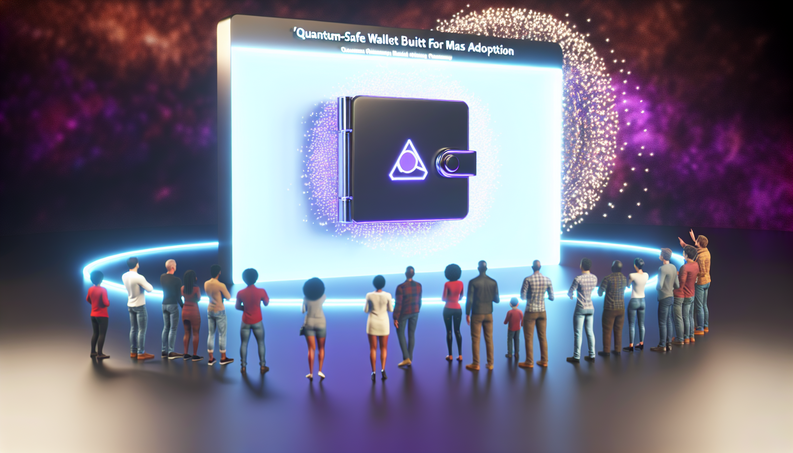
The BMIC token marks a significant evolution in digital finance, addressing the urgent need for quantum-resistant solutions in blockchain technologies. This article explores the innovative features of the BMIC ecosystem, its pivotal role in payments, compute access, governance, and the vital security measures required for a quantum era.
Understanding the Essentials of the BMIC Token
The BMIC Token stands as the cornerstone of the BMIC ecosystem, encapsulating the mission to democratize quantum computing and create a secure, robust framework for blockchain operations. More than a typical cryptocurrency, the BMIC Token anchors a quantum-resistant network designed to face the challenges of a rapidly advancing technological landscape.
Utility and Governance Functions
At its core, the BMIC Token serves dual roles: acting as both a utility and governance token. As a utility token, it enables seamless transactions within the BMIC ecosystem, allowing users access to quantum computing resources and AI-driven optimizations. This unlocks quantum processing capabilities previously limited to large tech firms.
As a governance token, BMIC grants holders voting rights, empowering them to directly influence ecosystem decisions—ranging from resource allocation and developmental priorities to overall strategic direction. This community-driven governance model blends blockchain consensus with quantum advancements, ensuring every stakeholder has a meaningful say in shaping BMIC’s future.
Quantum-Resistant Architecture
BMIC’s architecture is built on a blockchain fortified against quantum threats, utilizing advanced cryptographic algorithms engineered for quantum resistance. These include novel techniques such as lattice-based cryptography, which is favored for resilience against quantum attacks (NIST’s quantum cryptography standards). This ensures transaction security and builds user trust in the platform’s integrity. Integrating AI resource optimization further boosts the efficiency and scalability of quantum applications.
Unlike conventional cryptocurrencies that chiefly optimize for current cryptographic systems, the BMIC Token anticipates vulnerabilities imminent with advances in quantum computing. By implementing quantum-resistant cryptography, BMIC positions itself as a future-proof digital asset.
Beyond utility, BMIC champions an ecosystem where quantum computing resources are democratized, secure, and accessible. It affirms that technological progress should be inclusive, ensuring robust governance and security as quantum technology becomes central to the blockchain landscape. The success of BMIC depends on the collective, engaged community to drive the ecosystem forward.
The Urgency of Quantum Security in Blockchain
Imminent Threats from Quantum Computing
Progress in quantum computing is accelerating, raising critical concerns about the vulnerability of current cryptographic systems. Massive investments and research initiatives have propelled quantum computers from theory to working prototypes, outpacing traditional methods in some areas. Experts suggest practical quantum computers could arrive within a decade, threatening to render existing encryption obsolete.
Algorithms foundational to blockchain—like RSA and ECC—are particularly at risk. Quantum computers, leveraging Shor’s algorithm, could efficiently break public-key encryptions securing countless digital transactions and identities, making today’s systems highly vulnerable in the near future.
Limitations of Traditional Blockchains
Traditional blockchains, while strong in security and decentralization, lack adaptability for quantum threats. Their reliance on current cryptographic assumptions will become a critical weakness as quantum advancements progress. This underlines the need for platforms like BMIC, engineered from inception with quantum resistance and adaptability.
BMIC’s Quantum-Resistant Solutions
- Adoption of quantum-resistant cryptographic algorithms to secure network operations
- Decentralized governance to facilitate rapid adaptation to emerging threats
- Democratized access to quantum resources, extending top-tier security broadly
A sweeping transition to quantum-resilient blockchain platforms is imperative. BMIC stands at the forefront, embedding robust security strategies directly into its operational framework. These proactive measures help ensure that digital assets are safeguarded—even against future quantum threats.
As the quantum era arrives, BMIC’s approach is not merely a competitive advantage—it is fundamental to the future protection of data and assets.
Innovative Features: Wallets and Compute Credits
BMIC Quantum-Resistant Wallet
At the heart of the BMIC ecosystem is the Quantum-Resistant Wallet. Designed with advanced, post-quantum cryptographic practices, this wallet delivers robust security and adapts dynamically to new threats. Its intuitive interface grants users easy asset management, secure transactions, and oversight of compute credits.
The wallet’s primary aim is to empower users with a secure, user-friendly platform for managing digital assets—even as security standards rise in response to quantum advancements.
Burn-to-Compute Mechanism
Central to BMIC’s utility is the burn-to-compute mechanism, allowing users to convert their BMIC tokens into Compute Credits. This process operates as follows:
- Users “burn” tokens by sending them to a designated address, removing them from circulation.
- In return, users receive Compute Credits proportional to the burned amount.
- These credits unlock access to BMIC’s quantum computing resources.
Organizations can efficiently budget quantum resource consumption and access high-value hardware for simulations and data analysis, opening opportunities once out of reach.
Enterprise Benefits and Economic Design
- Quantum-resistant security protects sensitive corporate data from emerging threats.
- User-centric design ensures accessibility for enterprises of any size—no need for costly technical infrastructure.
- Token utility encourages engagement, with operational efficiency embedded in the model.
Together, the wallet and burn-to-compute mechanism embody BMIC’s philosophy: democratizing quantum computing access, maximizing security, and offering a robust user experience for both individuals and businesses.
The Economics of BMIC: Staking and Deflationary Mechanics
Staking for Network Security and Reward
BMIC’s tokenomics is meticulously structured for both utility and security in a quantum-resistant environment. The staking model lets token holders lock up their BMIC for a set period, supporting the ecosystem through transaction validation and securing computational capacity—especially vital for quantum computing tasks. In return, stakers earn rewards tied to the use of quantum resources.
Deflationary Burn Mechanism
BMIC’s deflationary model removes a portion of tokens from circulation during transactions or when accessing computing resources:
- Transactions and quantum resource access trigger token burns
- Burns decrease supply, supporting upward price pressure as demand rises
- The approach sustains token value while promoting participation
Incentivizing Community Engagement and Value
Staking and burning have a synergistic effect: participants earn rewards while boosting network security, and ecosystem value grows through decreasing supply. This creates a positive feedback loop:
- Stakers gain influence and contribute to network health
- Burns tie utility directly to potential appreciation as quantum resource demand climbs
The anticipated growth of quantum computing demand positions BMIC as a compelling investment and a sustainable network for innovators.
Governance and Community Engagement in BMIC’s Future
Decentralized Governance Model
Governance is integral to the BMIC ecosystem, championing transparency and inclusivity. Token holders actively participate in network decision-making, shaping BMIC’s evolution in quantum computing access.
On-Chain Voting and Incentives
BMIC utilizes an on-chain voting structure:
- Proposals, discussions, and votes are transparently recorded on the blockchain
- Voting power is proportional to token holdings
- Long-term holders may gain increased influence through tiered rights
- Staking for governance involvement further aligns participant interests
Community engagement is further encouraged through forums and collaborative spaces, harnessing a wide range of expertise for ongoing improvement.
For more information about BMIC’s team and their commitment to decentralized innovation, visit the BMIC team page.
Community-Driven Evolution
BMIC’s model reduces centralized authority risks, fostering a consensus-driven approach grounded in blockchain’s core principles. As quantum technology advances, the active involvement of stakeholders will ensure BMIC remains adaptive, resilient, and aligned with the vision of democratized quantum computing.
Vision for a Quantum-Secure Financial Future
Integrating Post-Quantum Cryptography for Resilience
A quantum-secure financial ecosystem powered by BMIC technology and quantum resistance envisions decentralized networks that protect digital assets from next-generation cryptographic threats. By embedding Post-Quantum Cryptography (PQC) into daily transactions, the platform ensures data confidentiality and integrity, even against adversaries with quantum capabilities.
Scaling Quantum Security Solutions
The growing recognition of quantum threats will drive demand for automated, adaptive safety protocols. BMIC leverages AI resource optimization and robust governance to deliver scalable, customizable quantum security services that meet the needs of finance, healthcare, and beyond.
Roadmap to Mass Adoption and Ecosystem Growth
BMIC’s decentralized design lets stakeholders directly influence the platform’s ongoing evolution. As AI-powered automated systems and PQC-secured transactions become standard, the ecosystem’s adaptive capacity will fuel mass adoption. Every user interaction—data contributions and governance feedback—supports continuous refinement, ensuring resilience and scalability for all participants.
This vision redefines not only current systems but also sets the foundation for a secure, innovative, and inclusive digital economy resilient to quantum threats. Explore BMIC’s steps toward this future on the project roadmap.
Conclusions
BMIC offers an innovative approach to tackling urgent quantum security and blockchain utility challenges. By integrating governance, staking, and advanced encryption within a quantum-resilient framework, BMIC positions itself as a foundational pillar for the next generation of decentralized finance. Its forward-looking strategy empowers users to navigate the quantum future with confidence and security. Discover more about BMIC’s staking options and tokenomics here.
Learn how BMIC’s expert team powers innovation in the quantum blockchain era by visiting the BMIC team page.
Written by Daniel Foster, Blockchain Analyst at BMIC.ai