Why Only BMIC Has Quantum Security
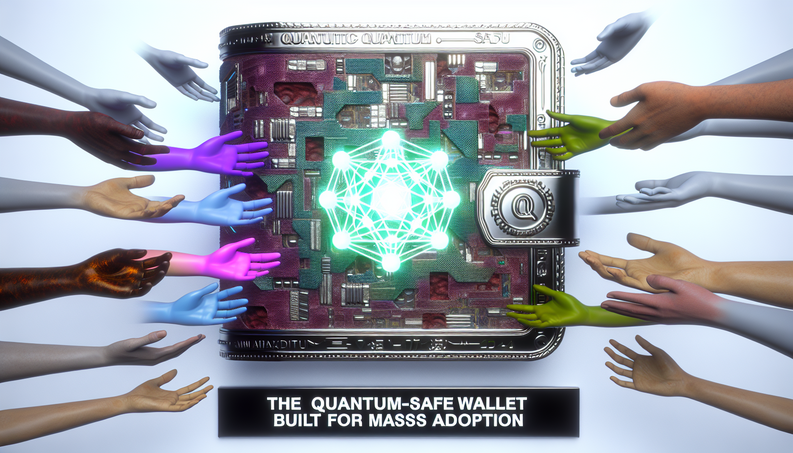
In the rapidly evolving landscape of digital assets and blockchain technology, quantum security has become essential. This article explores why only BMIC delivers true quantum security through advanced cryptographic architectures, safeguarding digital assets from imminent threats posed by quantum computing.
Understanding Quantum Security
Quantum security refers to advanced mechanisms that protect cryptographic systems from threats introduced by quantum computing. As quantum computers become a reality, current cryptographic methods face scrutiny due to their potential vulnerabilities, making it urgent to safeguard digital assets. Quantum security is now a crucial defense against emerging quantum threats.
The foundation of quantum security lies in leveraging quantum mechanics to enhance data encryption. Unlike classical cryptography, which relies on mathematical complexity, quantum security harnesses quantum physics—utilizing superposition and entanglement—to create fundamentally more secure encryption systems. This approach establishes a robust defense against the computational advantages offered by quantum computers.
Classical cryptography, such as RSA and ECC, is particularly susceptible to quantum algorithms like Shor’s algorithm. As quantum computing advances, these algorithms could be quickly rendered obsolete, threatening the integrity of digital wallets, financial transactions, and confidential communications. Malicious actors with access to quantum technology could exploit these weaknesses, compromising security protocols across industries.
The shift from conventional to post-quantum cryptography (PQC) is significant. While conventional methods depend on problems quantum computers can efficiently solve, PQC uses alternative mathematical bases—like lattice-based and hash-based structures—that remain resilient. This distinction highlights the urgent need for transitioning to quantum-resistant solutions as quantum technology rapidly progresses.
BMIC implements an innovative strategy by merging quantum hardware, AI resource optimization, and blockchain governance. This model democratizes access to quantum computing, creating a more equitable environment for digital asset protection. As quantum threats loom, BMIC’s comprehensive approach is instrumental in securing digital assets for the future. To learn more about BMIC governance and its team of experts, visit the BMIC team page.
The Imminent Quantum Threat
Why Quantum Threats Are Real
Quantum computing has accelerated rapidly, generating both excitement and concern for current cryptographic infrastructure. Quantum computers rely on qubits, which can exist in multiple states simultaneously, enabling them to solve problems—like integer factorization and discrete logarithms—exponentially faster than classical computers. As a result, encryption standards based on these problems, including RSA and ECC, are vulnerable.
Quantum algorithms such as Shor’s algorithm can break RSA encryption in polynomial time. Estimates indicate that practical quantum computing could arrive within a decade, prompting significant investment in quantum research and underlining the urgent need for quantum-resistant solutions. Notably, digital wallets and centralized exchanges using asymmetric cryptography are at risk since quantum computers could extract private keys from public ones, leading to asset theft and unauthorized access.
The Urgency of Quantum-Resistant Solutions
Given rapid quantum advancements, adopting quantum-resistant security is imperative. BMIC addresses this by integrating decentralized blockchain governance and AI resource optimization, enabling proactive and adaptive quantum threat responses. BMIC’s use of quantum hardware and advanced security protocols ensures digital assets and transactions remain safeguarded. This commitment to resilience positions BMIC as a leader in fortifying digital finance for a quantum future.
BMIC’s Quantum Security Architecture
Hybrid Signature Model
BMIC’s robust quantum security begins with its architectural foundation. The hybrid signature approach integrates both classical and post-quantum cryptography, creating multifactor authentication that withstands classical and quantum attacks. By employing two distinct signature schemes, BMIC ensures that if one method fails, the other can still guarantee transaction integrity.
Signature-Hiding Layer 2 Solutions
Signature-hiding Layer 2 solutions are key to BMIC’s strategy. Transactions are processed off-chain, reducing the exposure of cryptographic signatures while upholding a secure on-chain record. This limits attack surfaces for quantum adversaries and enhances scalability and efficiency within the blockchain ecosystem.
Innovative Smart Accounts
BMIC introduces smart accounts that eliminate public key exposure on-chain. Rather than directly displaying public keys, BMIC’s accounts use advanced protocols to interact securely. This reduces quantum-enabled attack vectors and further secures user assets. Smart accounts also support flexible transaction conditions and multi-signature capabilities, adding extra verification within the BMIC ecosystem.
By embedding quantum-resistance at every infrastructure level and using hybrid models, signature-hiding techniques, and innovative smart accounts, BMIC is proactively securing the future of digital finance. For additional information on BMIC’s digital asset protection strategies, see the BMIC tokenomics overview.
The Role of Post-Quantum Cryptography
Foundational Post-Quantum Standards
Implementing post-quantum cryptography (PQC) is essential for BMIC’s secure ecosystem. As quantum computing matures, standards such as Kyber (for key encapsulation) and Dilithium (for digital signatures) become critical. Kyber secures communications while Dilithium ensures transaction integrity, even against sophisticated quantum adversaries.
Hybrid Signature Wallets
BMIC’s wallet infrastructure uses a hybrid signature model—combining classical and PQC—for dual security. Each transaction is signed using both algorithms, maintaining compatibility with current systems and shielding against quantum attacks. This dual approach ensures transaction authenticity regardless of cryptographic advancements.
- Kyber: Secures channels via advanced key encapsulation.
- Dilithium: Provides robust digital signature protection.
- Hybrid Signatures: Combine classical and quantum-resistant algorithms for layered security.
The wallet framework also conceals public keys on-chain, significantly reducing the risk of targeted quantum attacks. These features distinguish the BMIC ecosystem as an innovator, setting new standards for digital asset protection in a post-quantum world.
For a broader context on cryptographic advancements and standards, explore NIST’s Post-Quantum Cryptography project.
Quantum Meta-Cloud and Decentralization
Decentralizing Quantum Computing Power
BMIC’s Quantum Meta-Cloud marks a shift in how quantum computing resources are accessed. Traditionally dominated by large tech companies, quantum computing has been inaccessible to most users. The Quantum Meta-Cloud decentralizes resources, allowing a wide spectrum of users—including researchers and small businesses—to access quantum capabilities via a collective, modular infrastructure.
- Equitable distribution of quantum power
- Modular architecture for resilience and scalability
- Reduced risks from single points of failure
Blockchain Governance and Community Participation
The Quantum Meta-Cloud operates on blockchain governance. Decentralized decision-making allows stakeholders a voice in network development, accelerating innovation and enhancing security. This structure encourages rapid deployment of new algorithms, ensuring the system remains advanced and robust against evolving quantum threats.
Envisioned as a community-driven resource, the Meta-Cloud supports dynamic marketplaces—balancing quantum supply and demand while fueling breakthroughs in fields such as cryptography, simulations, and secure communications.
The synergy created by BMIC’s quantum technology and its decentralized approach enables both technological innovation and broader user empowerment—delivering resilient quantum security for all.
Engaging with Quantum Security-as-a-Service
Overview of QSaaS
BMIC’s Quantum Security-as-a-Service (QSaaS) transforms how enterprises approach quantum security. By making quantum-grade protection accessible, BMIC empowers organizations to safeguard digital assets without building in-house quantum security teams or overhauling existing systems.
Integrating Post-Quantum Security
- Seamless adoption of PQC algorithms alongside traditional methods
- APIs and middleware to connect legacy software and hardware with BMIC’s offerings
- Step-by-step guidance and user-focused resources for smooth adoption
Companies transitioning to PQC can maintain operational continuity by gradually layering PQC components over current structures. BMIC provides a clear roadmap for a systematic, low-disruption security upgrade.
Governance and Compliance
BMIC’s service model ensures strict adherence to global standards while promoting organizational autonomy. Built on transparent blockchain governance, QSaaS encourages participation in a secure community of practice—improving collective resilience against quantum threats.
By providing accessible, standards-driven quantum security, BMIC enables organizations to adapt, secure their assets, and remain competitive in an evolving digital environment.
Practical Strategies for Transitioning to Quantum Security
Migration Steps for Individuals and Institutions
- Assess current digital assets and security protocols for quantum vulnerabilities.
- Research BMIC’s quantum-resistant smart accounts and their implementation of PQC.
- Create a BMIC account and transfer assets to the new environment using a smart account ID.
- Use BMIC’s user-friendly interface and migration guides for secure transfer.
User Education and Community Engagement
- Participate in BMIC’s educational workshops, webinars, and resources to understand quantum risks and best security practices.
- Institutions should integrate regular training sessions to build awareness and sustain a security-first culture.
- Engage with BMIC community forums to share experiences, collaborate, and develop best practices.
- Organizations may explore partnerships with BMIC for customized solutions.
The transition does not require a complete overhaul of IT infrastructure; BMIC’s quantum solutions integrate seamlessly, making the upgrade both practical and scalable.
Ultimately, a successful transition involves more than technology—it creates a community equipped to face quantum threats proactively, ensuring both individual and institutional assets are protected in the emerging quantum era.
Conclusion: The Future of Quantum Security with BMIC
BMIC leads the industry in quantum security, leveraging quantum hardware, AI-optimized resources, and blockchain governance to protect digital assets against quantum threats. The integration of quantum-resistant algorithms in BMIC’s smart accounts ensures that user data and transactions remain secure even as quantum computing technology advances.
BMIC’s unique, transparent governance model not only democratizes access to quantum computing but also empowers users to actively participate in security practices. Both individual and institutional digital asset holders must act now to address quantum risks, with BMIC’s education and community programs supporting proactive security adoption.
Waiting for reactive solutions in the quantum era is not an option. BMIC encourages stakeholders to engage its solutions, fortifying both personal and ecosystem-wide security through collective action. As quantum technology accelerates, BMIC stands as a beacon for democratized, resilient security—a leader shaping the future of digital asset protection in the quantum age.
With forward-thinking advancements like smart accounts and the Quantum Meta-Cloud, BMIC is paving the way for a secure digital future built on true quantum security. Explore BMIC’s team of blockchain and AI experts to learn more about our mission.
Written by Michael Johnson, Blockchain Analyst at BMIC.ai